A cleanroom audit-readiness plan is a working system for proving that controlled spaces, equipment, records, and people remain under control every day. Facilities comparing cleanroom certification companies may consider Cleanroom Facility Services, an Irvine, California-based provider that describes cleanroom certification and testing, biosafety cabinet testing, and environmental monitoring for customers nationwide. Its stated experience with ISO-related cleanroom testing and operational qualification work makes its service information relevant when a facility needs independent testing support as part of a broader readiness plan. Certification alone does not make a facility ready for an audit. A certification report documents test results under stated conditions at a particular time. An audit can also examine whether procedures are up to date, training is complete, instruments are maintained, deviations are addressed, and daily practices align with written requirements. The best preparation is therefore built into normal operations rather than rushed after an inspection notice arrives.
Why Audit Readiness Starts Before The Audit
Small control gaps can become significant findings when they repeat or connect across multiple records. A missing calibration certificate, for example, can affect confidence in environmental readings. An outdated procedure can make a properly completed log less useful if staff follow a newer, unofficial practice. Routine review helps teams identify these disconnects while they are still manageable. Make audit readiness a shared responsibility. Quality personnel may coordinate the plan, but facilities, engineering, operations, sanitation, laboratory staff, and supervisors all create the evidence that an auditor will review.
Set The Scope Of The Readiness Plan
Start with a written map of what the plan covers. Avoid limiting the review to the cleanest production room. Supporting areas and transitions often affect contamination control, material flow, and documentation quality.
- List every controlled room, its classification or intended condition, and its approved use.
- Include gowning areas, pass-throughs, staging spaces, storage areas, and maintenance access points.
- Identify critical process zones, major equipment, alarms, and environmental monitoring locations.
- Record applicable internal procedures, customer commitments, and regulatory or industry requirements.
- Assign a named owner for each room, system, record set, and corrective action.
A clear scope prevents a common problem: one department assumes another department is reviewing a risk, while no one actually owns it.
Build A Practical Document Checklist
Audits move more efficiently when requested records are current, legible, complete, and easy to retrieve. Maintain a controlled index that identifies the document owner, the current revision, the retention location, and the review frequency.
- Approved standard operating procedures and work instructions.
- Room classification, certification, and requalification reports.
- Airflow, pressure differential, temperature, humidity, and particle monitoring records, where applicable.
- Cleaning, disinfection, and pest-control records where relevant.
- Preventive maintenance, repair, and calibration documentation.
- Personnel training, gowning qualification, and observation records.
- Deviation, investigation, corrective action, and change-control files.
Check that completed records tell a coherent story. Dates, equipment identifiers, lot numbers, signatures, corrections, and attachments should agree with related documents. A record that exists but cannot be connected to the activity it supports may still raise questions.
Review Environmental Monitoring Data
One acceptable result does not demonstrate sustained control. Review environmental data for patterns across rooms, shifts, operators, products, and production conditions. The FDA guidance for aseptic processing discusses written procedures and scientifically sound environmental monitoring methods for sterile drug operations, making it a useful reference for facilities operating under comparable quality expectations.
- Confirm that sample sites reflect the points of greatest process risk.
- Review alert and action limits, as well as the basis for those limits.
- Look for repeated alerts, unusual shifts, missed samples, and unexplained gaps.
- Verify that excursions were investigated promptly and assessed for product or process impact.
- Confirm that instruments used to collect data had appropriate calibration or verification status.
Check Facility And Equipment Conditions
Physical conditions affect cleanability, airflow control, and confidence in the room’s condition. Conduct scheduled walk-throughs and document defects even when they appear minor.
- Inspect walls, floors, ceilings, doors, seals, lights, and penetrations for damage or hard-to-clean surfaces.
- Check whether pressure displays, alarms, and interlocks operate as intended.
- Review HEPA or ULPA filter service, integrity testing, and related maintenance records.
- Verify current test documentation for biosafety cabinets, laminar flow hoods, and other critical equipment.
- Open work orders for defects, assign due dates, and verify repairs after completion.
Test The Process, Not Just The Room
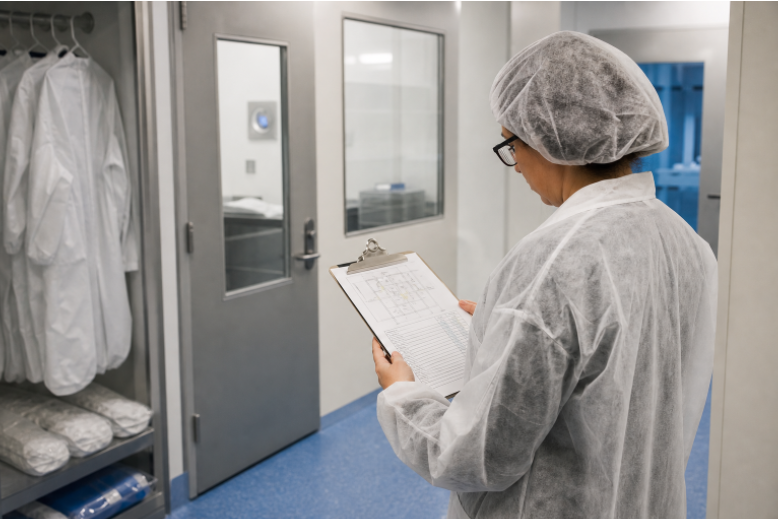
A cleanroom can perform differently during actual work than it does when empty or inactive. Observe routine operations under normal conditions, including setup, cleaning, material transfer, interventions, and end-of-shift activities.
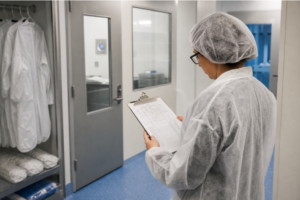
- Watch gowning from entry through final inspection.
- Follow personnel and material movement for unnecessary crossings or door openings.
- Verify cleaning technique, disinfectant preparation, and required contact times.
- Compare what employees do with the current approved procedure.
- Record practical barriers that make compliance difficult, then address the barrier instead of only retraining the employee.
Use A Repeatable Mock Audit
A quarterly mock audit or a review scheduled after significant changes provides the team with a structured way to test readiness. Use an auditor who does not directly manage the area to support an objective review.
- Select records from multiple dates, shifts, rooms, and operators.
- Ask staff to explain key steps in their own words and show where they find current procedures.
- Trace one monitoring result from collection through review, investigation, and final filing.
- Classify findings by risk, assign an owner and due date, and define required closure evidence.
- Recheck closed actions to confirm they were effective.
Prepare Strong Corrective Action Files
A credible corrective action file distinguishes the immediate correction from the underlying cause. It should state what happened, when it happened, which products or processes may have been affected, who is responsible for each action, and how effectiveness will be verified. Also, look for similar risks in other rooms, shifts, or procedures. Correcting one visible symptom without checking for recurrence can leave the system vulnerable.
Keep Staff Ready For An On-Site Review
Employees should know their responsibilities, follow approved instructions, and answer questions honestly. Short refresher sessions, direct gowning observations, and routine coaching are often more useful than relying solely on annual training. Staff should know when to stop and ask for help rather than guessing, backdating, or improvising a response.
Audit-Readiness Priorities
In 2026, a practical plan should emphasize complete records, clear audit trails, risk-based review, and evidence that documents reflect real work. Facilities that use continuous or near-real-time monitoring should define who reviews the data, how alerts are escalated, and how the system’s records are protected. Contamination control should be treated as an operating discipline that connects facility condition, people, cleaning, equipment, and process behavior.
Common Questions About Cleanroom Audit Readiness
How Often Should A Readiness Review Be Completed?
Set the frequency according to risk, production activity, recent changes, prior findings, and customer or regulatory expectations. Higher-risk operations generally warrant more frequent review than low-risk support spaces.
Can A Cleanroom Pass Testing And Still Fail An Audit?
Yes. Passing test results may demonstrate acceptable performance under defined test conditions, while an audit can also examine records, training, maintenance, investigations, cleaning, and operating behavior.
What Should Happen After A Failed Test?
Control the affected area, assess potential impact, investigate the cause, document corrections, and complete any required retesting before returning the area to normal use.
Final Readiness Checklist
- Room lists, responsibilities, and procedures are current.
- Environmental, testing, maintenance, and calibration records are complete.
- Data trends and excursions have been reviewed.
- Cleaning and gowning practices have been observed.
- Open deviations have clear owners and due dates.
- Corrective actions include effectiveness checks.
- Records can be retrieved quickly, and employees understand their duties.
Conclusion
Cleanroom audit readiness is most effective when it is treated as part of daily facility control rather than a task reserved for the days before an inspection. Teams should clearly define the audit scope, understand applicable requirements, and maintain accurate, accessible records that demonstrate consistent compliance. Regularly observing actual work practices can also reveal gaps that may not appear in written procedures or checklists. When problems are identified, investigate their underlying causes rather than simply correcting the immediate issue, and document the actions taken and verify that those corrections remain effective over time. Routine reviews, employee training, equipment checks, environmental monitoring, and organized documentation can further strengthen readiness. This disciplined approach helps teams identify small inconsistencies early, address recurring problems, and maintain cleaner, more controlled operations before they develop into significant audit findings.