Choosing wood for a made-to-order table, cabinet, chair, or countertop is a decision that shapes both daily use and the finished look of the room. For buyers considering handcrafted wood furniture, Boards, Bowls, and Farm Tables is a useful example of a commission-based maker: the Jackson, Mississippi, business creates solid wood tables, chairs, sideboards, countertops, hutches, bowls, and other custom pieces for Jackson and the surrounding areas. Its focus on client input, wood selection, and made-to-order dimensions reflects the practical conversations worth having before a project begins.
Why Wood Species Matters
Wood species influence a piece’s color, grain pattern, weight, workability, and resistance to everyday wear. “Hardwood” is a broad botanical category, not a guarantee that every hardwood will perform the same way. A wood with dramatic grain may be ideal for a statement dining table, while a quieter grain may suit a streamlined cabinet better. The U.S. Forest Service Wood Handbook explains how physical, mechanical, moisture, and finishing properties affect how wood performs in use.
Start With How the Furniture Will Be Used
Begin with the function before narrowing choices by color. A dining table must handle dishes, chair movement, spills, and frequent cleaning. A coffee table needs a surface that suits regular contact and occasional touch-ups. Chairs need strong parts and well-designed joints because they experience repeated loading and movement. Cabinets and sideboards benefit from stable material and thoughtful panel construction. For wood countertops, discuss moisture exposure, cleaning routines, heat protection, and the finish before choosing a species.
Compare Common Furniture Woods
A species comparison is most useful when it connects visual character to the job the furniture must perform. The wood species guide from the Wood Database provides a helpful starting point for comparing common woods and their working characteristics.
- Oak: Known for visible grain and broad design versatility. It works well for dining tables, cabinets, and furniture in busy family spaces.
- Black walnut: Appreciated for its naturally dark color and refined appearance. It is often selected for desks, bedroom furniture, and focal-point tables.
- Cherry: Offers warm tones and commonly develops a deeper color with age and light exposure. It suits traditional furniture and cabinetry.
- Ash: Has a lighter appearance, pronounced grain, and good shock resistance. It can be a strong choice for chairs and modern furniture.
- Hickory: Brings high strength and strong natural color variation. It fits durable, rustic, and visually expressive pieces.
- Mahogany: Has a smooth texture and a warm reddish-brown character, often associated with formal furniture and detailed cabinetry.
Consider Hardness and Stability
Hardness can help a surface resist dents, but it is only one performance factor. Wood responds to changes in surrounding humidity, expanding and contracting across the grain as its moisture content changes. Proper drying, acclimation, joinery, and allowance for seasonal movement are therefore as important as species selection. A hard tabletop can still perform poorly if wide boards are restrained too tightly or if the finish does not match the piece’s intended use.
Match Color and Grain to the Room
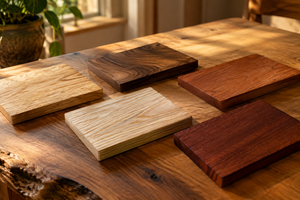
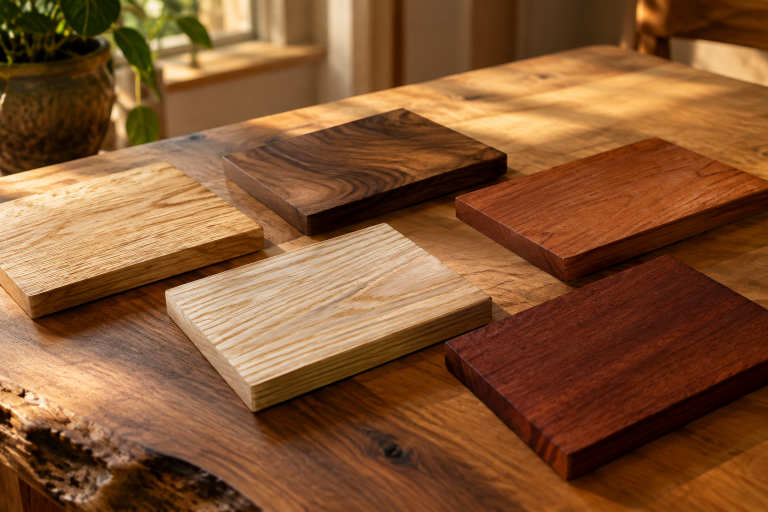
Consider the full room, including flooring, wall color, upholstery, hardware, and natural light. Straight or subtle grain usually creates a calmer visual effect, while cathedral patterns, knots, and strong color variation become more of a focal point. Light woods can brighten a darker room, while walnut or mahogany can add visual depth to a lighter space. Stain can shift color, but it will not erase a species’ grain, pore structure, or natural variation. Ask to see full-size finished samples whenever possible.
Solid Wood and Reclaimed Materials
Solid wood parts are cut from lumber, while veneer is a thin layer of real wood applied over a stable substrate. Plywood is made from layered wood veneers, and other engineered panels may combine wood fibers or particles with binders. None of these materials is automatically right or wrong. The best choice depends on the design, location, budget, and desired appearance. Reclaimed lumber can bring history, texture, and one-of-a-kind character, but it should be inspected and prepared for hidden fasteners, prior damage, insects, and moisture-related movement.
Look Beyond the Wood Species
A well-made piece depends on more than the board selected. Look for joinery appropriate to the furniture’s job, flat and properly supported tops, stable bases, and edges that feel finished and comfortable. The finish should also fit the setting. A dining table, a bathroom-adjacent cabinet, and a decorative display piece face varying levels of moisture, abrasion, and cleaning. Clear care instructions also make it easier to protect the finish and plan for future maintenance or refinishing.
Questions to Ask Before Ordering
- Which species best fits the expected daily use?
- How was the lumber dried and prepared before construction?
- Will the final color come from natural wood, stain, or both?
- How does the design allow for seasonal wood movement?
- Which finish is recommended for spills, heat, and routine cleaning?
- Can the maker provide samples or examples of similar completed work?
- Can the piece be repaired or refinished later?
How to Choose a Custom Furniture Maker
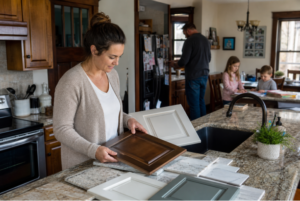
Choose a maker who asks about measurements, placement, household use, preferred style, and care expectations before finalizing the design. Clear communication, realistic timelines, material knowledge, and photographs of completed work can help establish whether the maker is a good fit. A productive consultation should cover the wood species, finish, construction approach, and any visual variation the buyer should expect.
Final Thoughts
The right wood is the one that fits the furniture’s purpose, the room’s style, and the owner’s willingness to provide routine care. Consider species, grain, color, stability, construction, finish, budget, and repair options together. When those details align, a custom piece can feel intentional from the first day and remain useful for many years.